Build a practical budget-dinner pantry
Choose flexible staples that work across several meals, without filling your shelves with ingredients you never use.
Serving illustration.
A budget-friendly pantry is a small collection of ingredients you will cook with repeatedly. It does not need to be a wall of bulk purchases. Start with the meals you enjoy, then choose staples that connect those meals. The aim is to reduce unused food and last-minute decisions, not to promise a particular grocery total.
Choose a base, a filling ingredient and a flavor
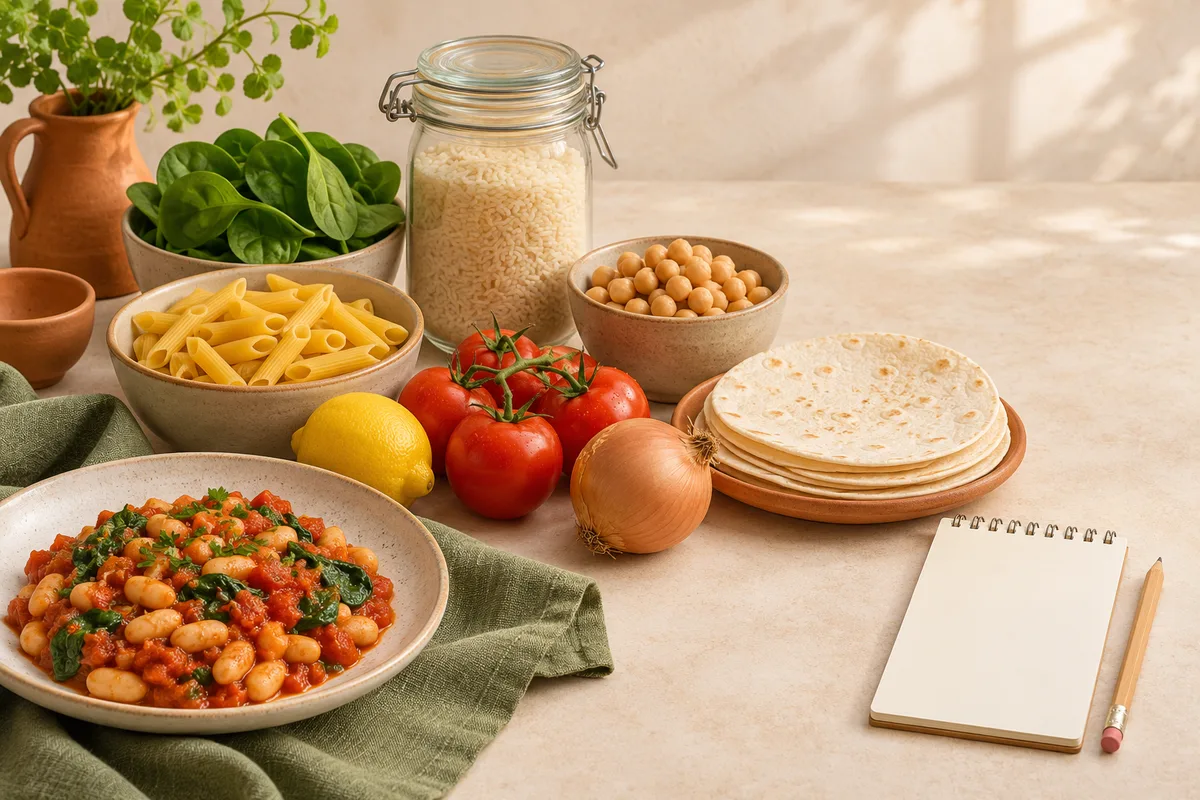
Think in flexible combinations: pasta with beans and tomatoes, rice with chickpeas and vegetables, or tortillas with beans and cheese. These are meal structures rather than complete nutritional plans. Add foods that suit your needs and preferences.
Pick one or two ingredients from each group to begin with. Buying every possible staple at once can use up the budget you intended to save.
A short starter list
Choose the forms and package sizes that match your household. Dried beans require different preparation from canned beans; they are not interchangeable in cooking instructions.
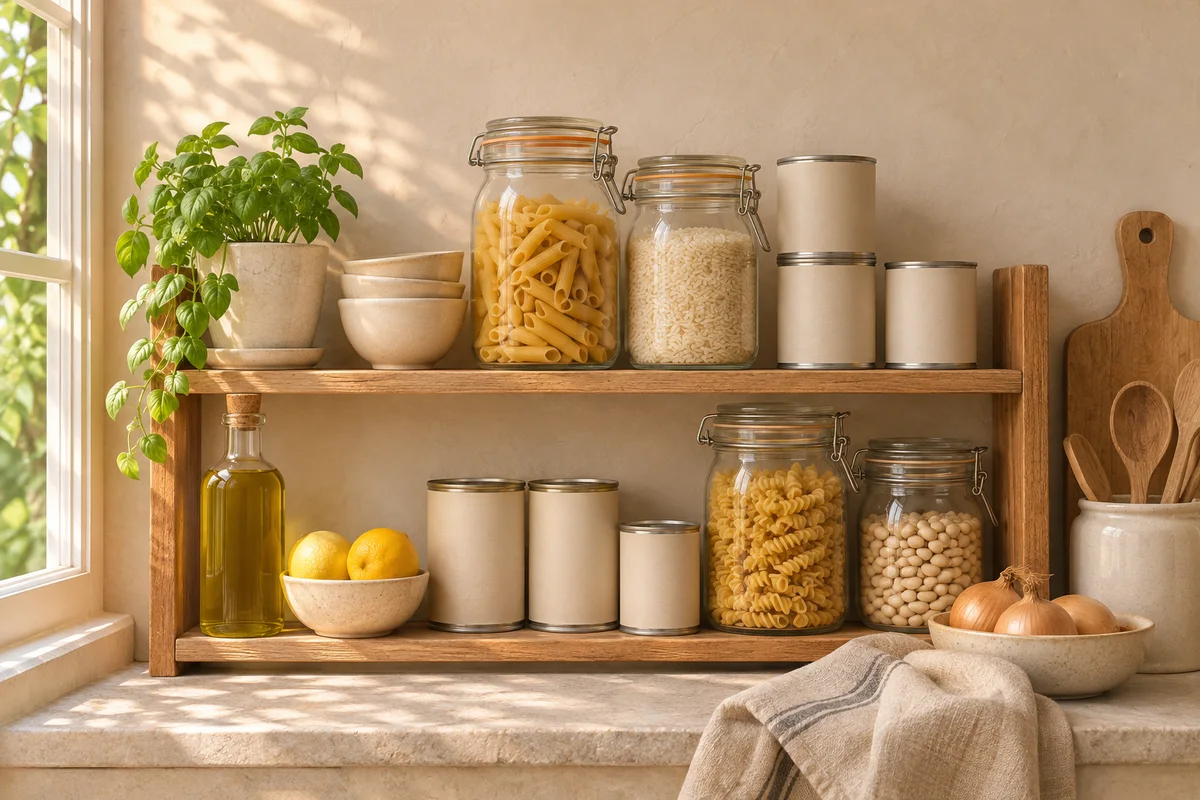
- Bases: pasta, rice or tortillas.
- Filling ingredients: canned beans, chickpeas or another protein you regularly use.
- Vegetables: a mix of fresh and frozen options you enjoy.
- Flavor: olive oil or another cooking oil, a few spices and a lemon or lime.
- A flexible sauce ingredient, such as canned tomatoes.
Compare the useful cost
Look at the unit price when it is available, but also consider what you can use before it spoils. A larger package is not automatically a better purchase for your household. Check the recipe quantities and think about a second use before buying a special ingredient.
This guide does not list fixed meal prices because prices and serving needs differ. If you want a real cost per serving, record your own receipt and the portion of each ingredient used.
Make a pantry night easy
Keep a short list of two or three familiar meals beside your pantry inventory. On busy nights, choose from that list before looking for something new. Replace only the items you used rather than rebuilding the pantry every week.
Organize older packages so they are easy to see, follow their labels, and check ingredient lists for allergies. Use the kitchen tools you already own before adding specialized equipment.
Sources & editorial notes
Follow ingredient labels and the cooking guidance below. Food-safety references are listed for further reading.
Read our editorial policy