Meal prep in a small kitchen
A calm, compact preparation routine for kitchens with limited counter space.
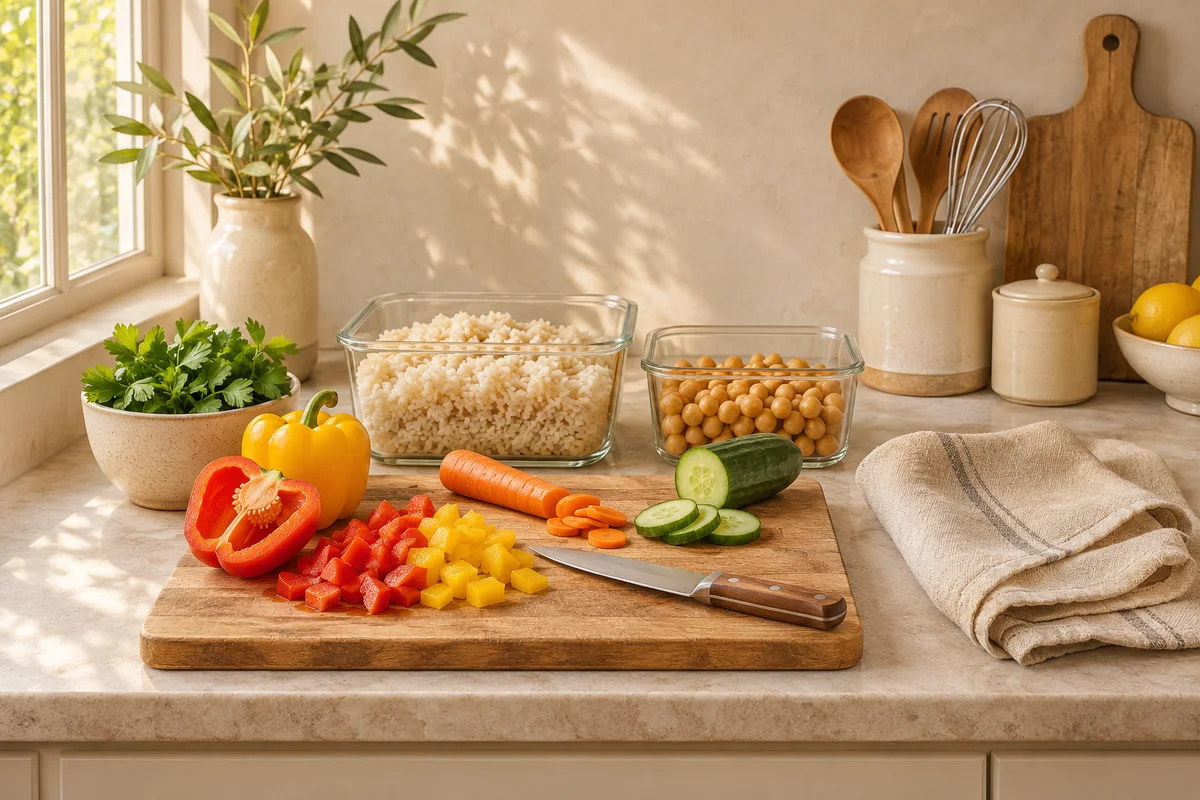
Serving illustration.
Meal preparation does not have to mean cooking a week of identical containers. In a small kitchen, preparing a few useful components can be enough: washing vegetables, measuring dry ingredients and writing the order of the next meal. Plan around the space you actually have in the refrigerator as well as on the counter.
Clear one working area
Choose a single area for your cutting board and another for finished ingredients. Put away equipment you will not use. Before handling food, clean the surface and wash your hands. Keep raw animal ingredients separate from foods that will be eaten without further cooking.
Set out the containers you intend to fill before starting. If they will not fit in your refrigerator, reduce the batch instead of creating a storage problem at the end.
Prepare components, not every finished meal
Choose components that appear in your next two dinners. A chopped onion or a measured seasoning mix can save a little work without committing you to identical meals. Follow ingredient-specific storage guidance; a single storage duration does not apply to every food.
- Read both recipes before starting.
- Measure shelf-stable ingredients into clearly labeled containers.
- Prepare produce using clean equipment.
- Keep sauces or dressings separate when texture matters.
- Write the date and contents on stored food.
Work in a practical order
Begin with tasks that do not require the stove, then move to one heated task at a time. In a compact space, using every burner can make movement and cleanup harder. Leave a clear space to set down hot pans safely.
Wash or move tools out of the way between tasks. A short reset can be more useful than buying additional storage items.
Leave space for food safety
Preparation ahead is useful only when food is handled and chilled properly. Follow current guidance for prompt refrigeration, keep perishable food cold, and use appropriate reheating temperatures. Do not infer safety from smell alone.
The CDC source below explains the clean, separate, cook and chill approach. A food thermometer is useful for checking cooked meat, poultry and reheated dishes. This guide does not replace instructions for specific ingredients.
Sources & editorial notes
Follow ingredient labels and the cooking guidance below. Food-safety references are listed for further reading.
Read our editorial policy